
What This Means for Your Organization:
- Missing critical problems means contract delays or disqualification.
- Your IT provider alone likely isn’t preparing you for CMMC.
- Documentation gaps, not tech failures, are the primary reason companies fail assessments.
Most small businesses think they’re on track for CMMC because they’ve good cybersecurity tools or a trusted Managed Service Provider (MSP). But compliance isn’t about what you think you have, it's about what you can prove. That's where many organizations fall short. In our work with SMBs preparing for CMMC Level 2, we’ve seen a pattern of costly missteps; ones that delay assessments, fail assessments, or even cost companies their eligibility to bid. Below are the most common issues we see companies overlook, and what you can do differently.
1. Assuming Your IT Team Has it Covered
You may have strong cybersecurity tools in place like EDR, MFA, or patch management, but CMMC isn’t just about controls. It’s about how those controls are managed, documented, and proven.
- Assessment Readiness: Most MSPs aren’t responsible for your compliance documentation, SSP, POA&M, or assessment readiness.
- Why it matters: If only you’re relying on your IT team to “get you compliant,” you’re likely unprepared for a real assessment.
- What to do: Ask who’s actually writing your policies, mapping them to NIST SP 800-171, and preparing evidence. If the answer is “no one yet,” you're at risk of failing a CMMC assessment.
2. Underestimating the Role of Documentation and Policy
Tech is only half the battle. You also need to prove compliance with formalized, mapped policies and repeatable processes.
- Issue: You may have the tools in place, but lack proper documentation.
- Why it matters: Assessors don’t just want to see security controls in action. They want to know they’re consistent, intentional, and documented.
- What to do: Make sure your System Security Plan (SSP) and policies are in place before your assessment. If they’re incomplete or generic, they will be flagged. It is important to not use templates here, and instead focus on documentation that reflects your specific business environment.
3. Thinking "We’re Too Small to Be Flagged" or "We’ll Get a Pass"
Size does not equal security. In fact, small businesses are often seen as the softest targets in the DoD supply chain.
- Issue: Believing you're too small to face consequences leads to inaction.
- Why it matters: The DoD is enforcing CMMC across the entire supply chain. If your contracts are handling CUI, you're in scope.
- What to do: Act now. Even if your contract hasn’t called for CMMC yet, the requirements are in effect November 10, 2025. Early preparation puts you ahead of competitors still scrambling.
4. Treating CMMC Like a One-Time Project
Many SMBs approach CMMC as something to “get through” instead of something to build into their operations. They think that once the assessment is over, they can go back to business as usual.
- Issue: Many businesses focus on “passing” an assessment instead of maintaining a security program.
- Why it matters: CMMC isn’t just about a point-in-time score. It’s about maturity. If your practices aren’t sustainable, assessors will notice.
- What to do: Shift from “project” to “program.” Build a culture of security and regular review cycles. That’s what assessors and DoD partners are really looking for.
5. Starting too Late and Rushing the Process
Many SMBs wait until a contract or prime pushes them to get certified and then are left scrambling. They then hire vendors who promise fast fixes but don’t prepare them properly, costing time and money.
- Issue: Compressed timelines lead to poor decision making, missed steps, and overlooked requirements.
- Why it matters: Rushed remediation leads to poor documentation, weak policy implementation, and failed assessments.
- What to do: Start your readiness journey now. A proper gap assessment, remediation, and internal validation process takes time. There are no shortcuts to maturity.
Want to Know If You’re Missing Something?
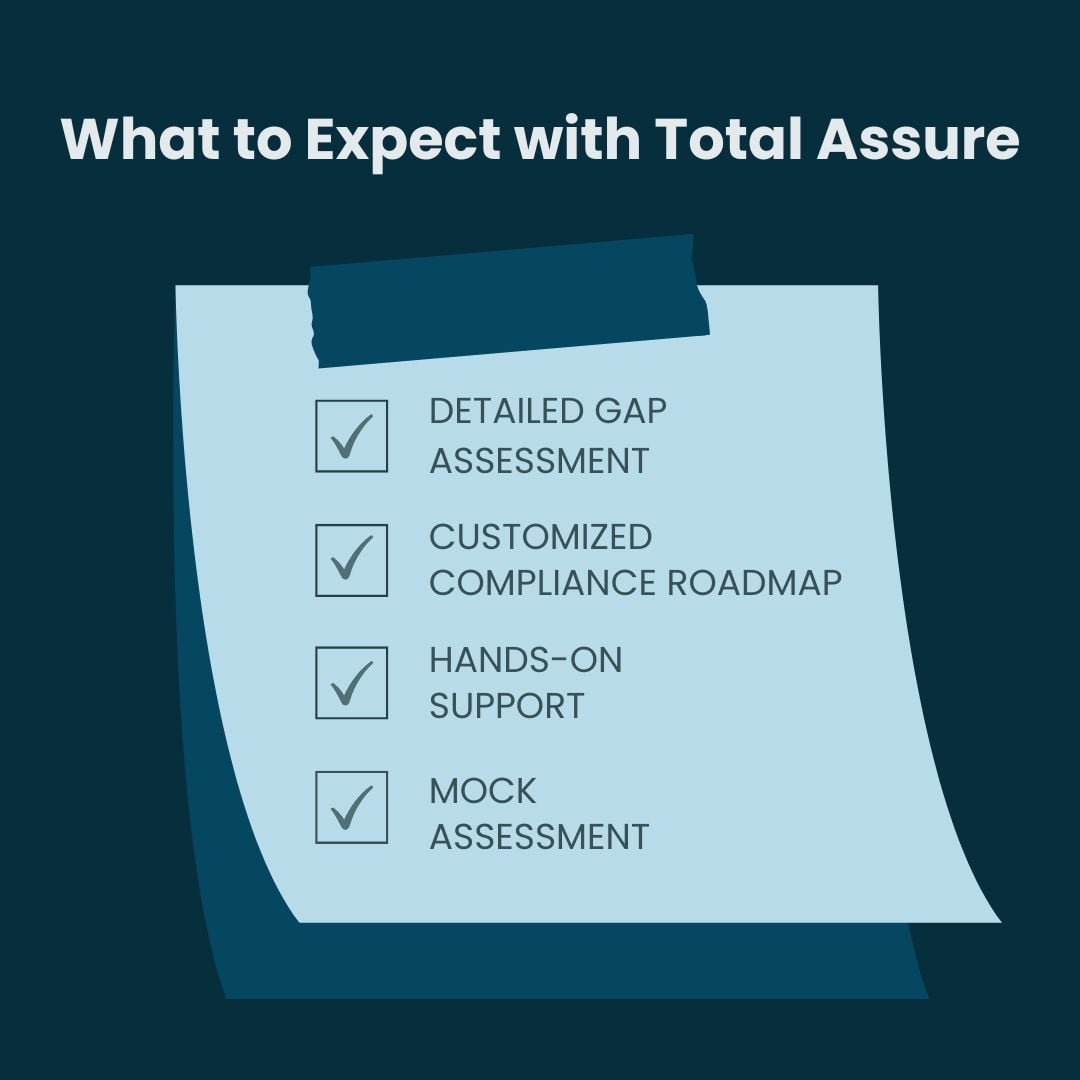
Total Assure helps SMBs like yours identify and close CMMC gaps before they become expensive problems. Our proven readiness process includes:
- A detailed gap assessment mapped to NIST SP 800-171
- Customized compliance roadmap and policy templates
- Hands-on support with documentation and control implementation
- Internal validation so you're confident before involving a C3PAO
To get your FREE assessment, fill out our form today.
About Total Assure
Total Assure, a spin-off from IBSS, provides uninterrupted business operations with our dedicated 24/7/365 in-house SOC, robust managed security solutions, and expert consulting services. Total Assure provides cost-efficient, comprehensive, and scalable cybersecurity solutions that leverage 30 years of experience and expertise from IBSS. Total Assure partners with its customers to identify security gaps, develop attainable cybersecurity objectives, and deliver comprehensive cybersecurity solutions that protect their businesses from modern cybersecurity threats.
Check out our blog series on NIST SP 800-171.
For more information on how Total Assure can assist your organization in achieving NIST SP 800-171 compliance, please contact our team directly.